
Osage County District Court Overview
Kansas District Courts are general-jurisdiction trial courts. For Osage County, that means the District Court can handle criminal cases, civil suits, domestic relations, divorce, probate estates, guardianship, conservatorship, juvenile matters, care and treatment, traffic filed at the state or county level, and small claims. Probate is not a stand-alone county probate court in Kansas; it is handled through the probate jurisdiction of the District Court.
Osage County is part of the 4th Judicial District with Anderson, Coffey, and Franklin counties. The local District Court sits in Lyndon and is the primary source for county-level state court records. The Kansas Judicial Branch identifies district courts as the trial courts of Kansas, while municipal courts are city courts for ordinance violations, usually traffic and minor offenses inside city limits.
The Kansas Judicial Branch municipal courts page is assigned to this page because it explains the lower-court layer that can affect Osage County traffic and ordinance cases.
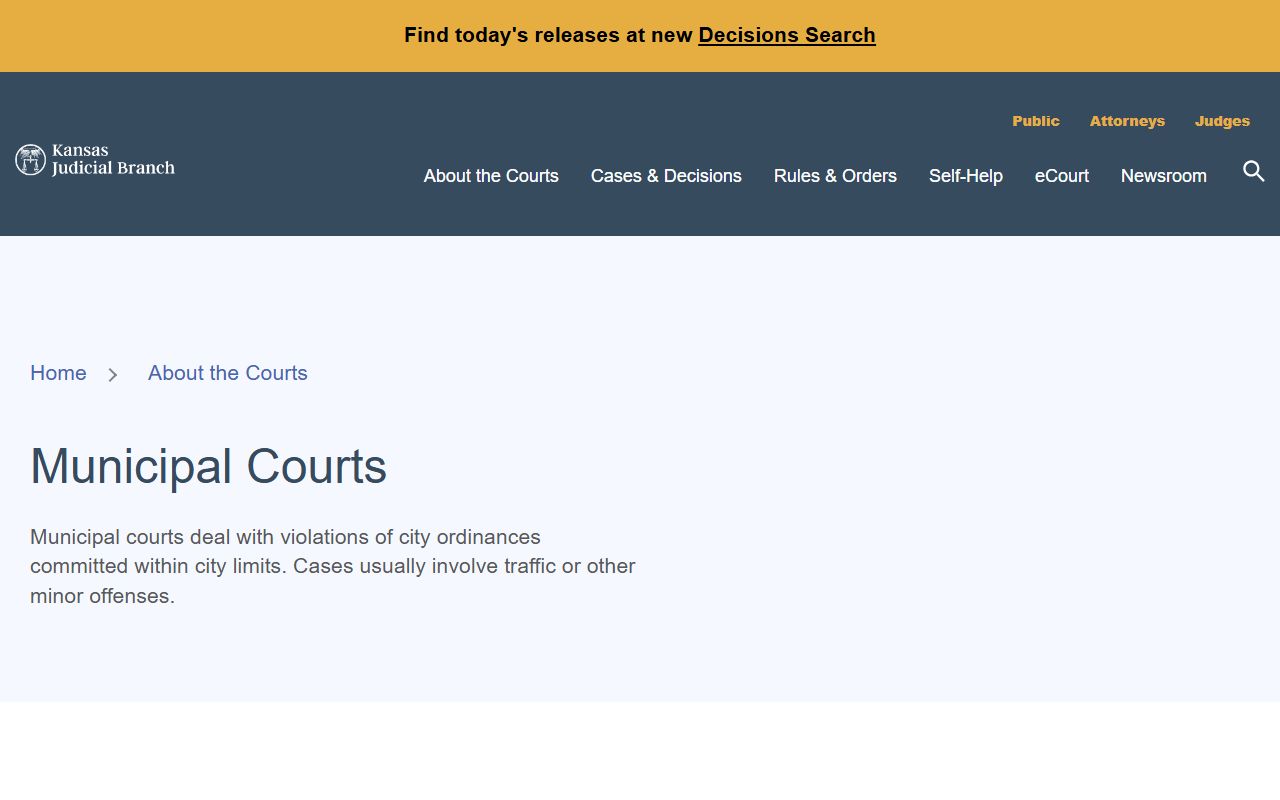
That state source supports the local distinction between District Court records and municipal court dockets.
Osage County District Court Contacts
Osage County does not have multiple numbered county trial courts like some states. The key court for state trial records is the Osage County District Court in the 4th Judicial District. Municipal courts in Osage City, Carbondale, and Lyndon are listed because they are common local venues for city traffic and ordinance matters that might not appear as District Court cases.
| Court | Type | Address | Phone / Contact |
|---|---|---|---|
| Osage County District Court | General jurisdiction trial court | 717 Topeka Avenue, PO Box 549, Lyndon, KS 66451 | 785-828-4514 |
| Osage City Municipal Court | City ordinance and traffic court | 201 South 5th Street, PO Box 250, Osage City, KS 66523 | 785-528-3714 |
| Carbondale Municipal Court | City ordinance and traffic court | 234 Main Street, Carbondale, KS 66414 | 785-836-8080; citycourt@carbondaleks.com |
| Lyndon Municipal Court | City ordinance and traffic court | Lyndon city court contact listed through city court page | 785-828-3146 ext. 101; lyndon.municipalcourt@gmail.com |
District Court vs Municipal Court
Kansas does not use a county court or justice court layer for Osage County trial records in the way some states do. The practical split is District Court versus municipal court. District Court is the broad state trial court. Municipal courts are city courts for local ordinance violations inside city limits, most often traffic and minor offense matters.
| District Court | Municipal Court | |
|---|---|---|
| Record Source | Kansas Case Search, courthouse terminal, Clerk of the District Court, and Judicial Branch request process | City court clerk, city docket, local payment channel, and municipal court notices |
| Case Types | Civil, criminal, probate, family, juvenile, small claims, county/state traffic, care and treatment | City ordinance violations and city traffic matters inside municipal limits |
| Appeal Path | Appeals go to Kansas appellate courts when allowed by law | Municipal appeals generally go to District Court |
| Local Example | A State of Kansas criminal case or county-level traffic case with an Osage District Court number | Osage City, Carbondale, or Lyndon city ticket or ordinance case |
Osage County District Court Case Flow
Case flow depends on type. Criminal and traffic prosecution files begin with a citation, arrest, complaint, information, or other charging paper, then move through first appearance, bond, preliminary hearing where applicable, status settings, plea or trial, disposition, sentencing, and possible appeal. The public docket examples show events such as Bond - Appearance, First Appearance, Preliminary Hearing, Status Conference, Diversion - Status, Diversion - Revocation, Bench Trial, and Review Hearing.
Diversion can change the path. The Osage County Attorney publishes local diversion payment and warning details, including a warning not to pay the District Court before diversion is filed because doing so can void diversion and make the matter go down as a guilty charge. That point matters for District Court users because a docket event may show diversion status or revocation before the record has a final conviction, dismissal, or completed diversion outcome.
Criminal flow: Arrest or citation › complaint or information › first appearance › bond or release order › preliminary hearing when required › status conference › plea, diversion, or trial › disposition › sentence or supervision › appeal if allowed.
Civil flow: Petition filed › service › answer or response › motions › discovery or settlement work › hearing or trial › judgment or order › enforcement, satisfaction, or appeal.
Probate flow: Petition › will or estate filing › appointment of fiduciary › notice › inventory and claims › accounting or settlement › distribution and closing order.
Osage County Court Divisions
The Osage County District Court record categories are broad because the District Court is the trial court for the county. Criminal records include felony and misdemeanor cases filed by the State of Kansas through the County Attorney. Civil records include disputes, judgments, garnishments, small claims, and related orders. Domestic records include divorce, custody, parenting time, support, and later modification or enforcement filings.
Probate Division records include estates, wills, small estate matters, guardianship, conservatorship, and trust matters filed in District Court. Juvenile and care-and-treatment matters are also District Court records, but public access is more limited. Municipal court divisions are not District Court divisions; they are separate city courts and should be checked directly when a citation or summons names a city court.
The courthouse also houses or connects to offices that are related but distinct. The County Attorney is on the first floor and prosecutes state, traffic, juvenile, child-in-need-of-care, involuntary commitment, and county code matters. The County Clerk and Register of Deeds work with noncourt county records, budgets, election files, land records, liens, UCC filings, military discharges, and cemetery or older local records. Those offices can be in the same building, but they do not replace the Clerk of the District Court for case files.
Osage County District Court
Osage County Courthouse
717 Topeka Avenue, PO Box 549
Lyndon, KS 66451
785-828-4514
Fax: 785-828-4704
Monday-Friday, 8:00 a.m.-12:00 p.m. and 1:00 p.m.-4:00 p.m.
Osage County Fourth Judicial District
The 4th Judicial District matters because some administration, judges, docket references, and district resources are regional rather than Osage-only. Research identified Kansas Judicial Branch information for Osage County District Court and related 4th Judicial District references. It also found that district-level pages may differ in names or timing, so the local clerk contact and official Judicial Branch district page are the safest sources for current filing and record questions.
County-level prosecution is handled by the Osage County Attorney's Office, located in the courthouse. That office prosecutes criminal, traffic, juvenile, child-in-need-of-care, involuntary commitment, and county-code matters. The prosecutor's role helps explain why District Court criminal and traffic docket captions often show State of Kansas and County Attorney's Office, Osage County.
Lower court records need a venue check. Osage City Municipal Court uses its own payment route and tells users they need a court case number. Carbondale Municipal Court meets on a monthly schedule at City Hall. Lyndon Municipal Court publishes local courtroom rules, including proper attire, devices turned off, no photography or audio recording, and no food or drink. These city rules and schedules are not District Court instructions, but they matter when a citation or notice names the municipal court.
The U.S. District Court for the District of Kansas is separate from the Osage County District Court. It handles federal matters and has divisional courthouse access in Kansas City, Topeka, and Wichita.
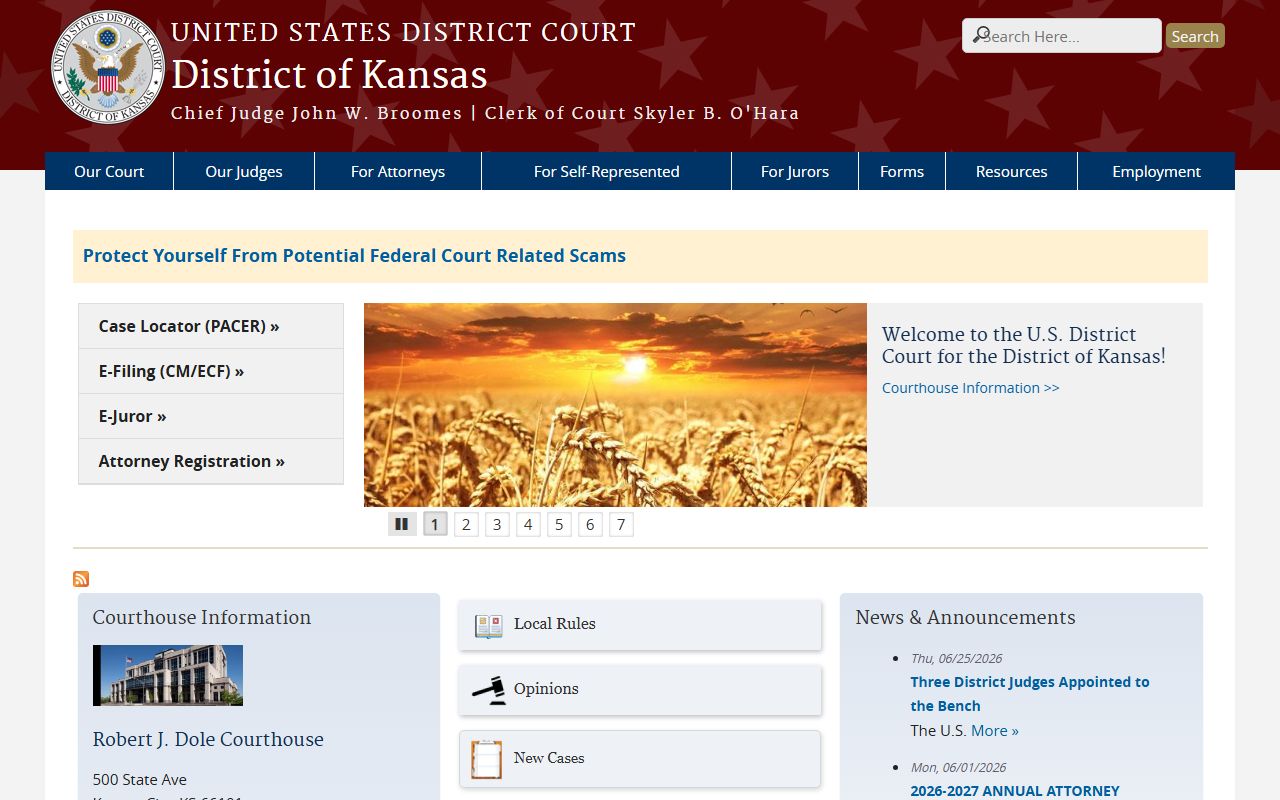
The federal source is relevant only to show that county District Court records and federal district court records are not searched in the same system.
Federal Records Are Separate
Federal records for Osage County residents are not Osage County District Court records. The District of Kansas court records page explains that PACER provides federal case and docket information for federal appellate, district, and bankruptcy courts. Public terminals are available at federal divisional offices, and federal docket access follows federal rules, fees, and security practices.
The Topeka federal courthouse is the nearby federal access point noted in the research, but federal venue is set by federal rules rather than by county preference. Federal public hours, terminal rules, photo ID requirements, and device restrictions differ from Osage County District Court practice. A Kansas state felony, divorce, probate estate, or county traffic matter should not be searched as a federal case unless a federal court notice, PACER record, or federal agency filing points that way.
The District of Kansas court records page explains federal PACER and public-terminal access.
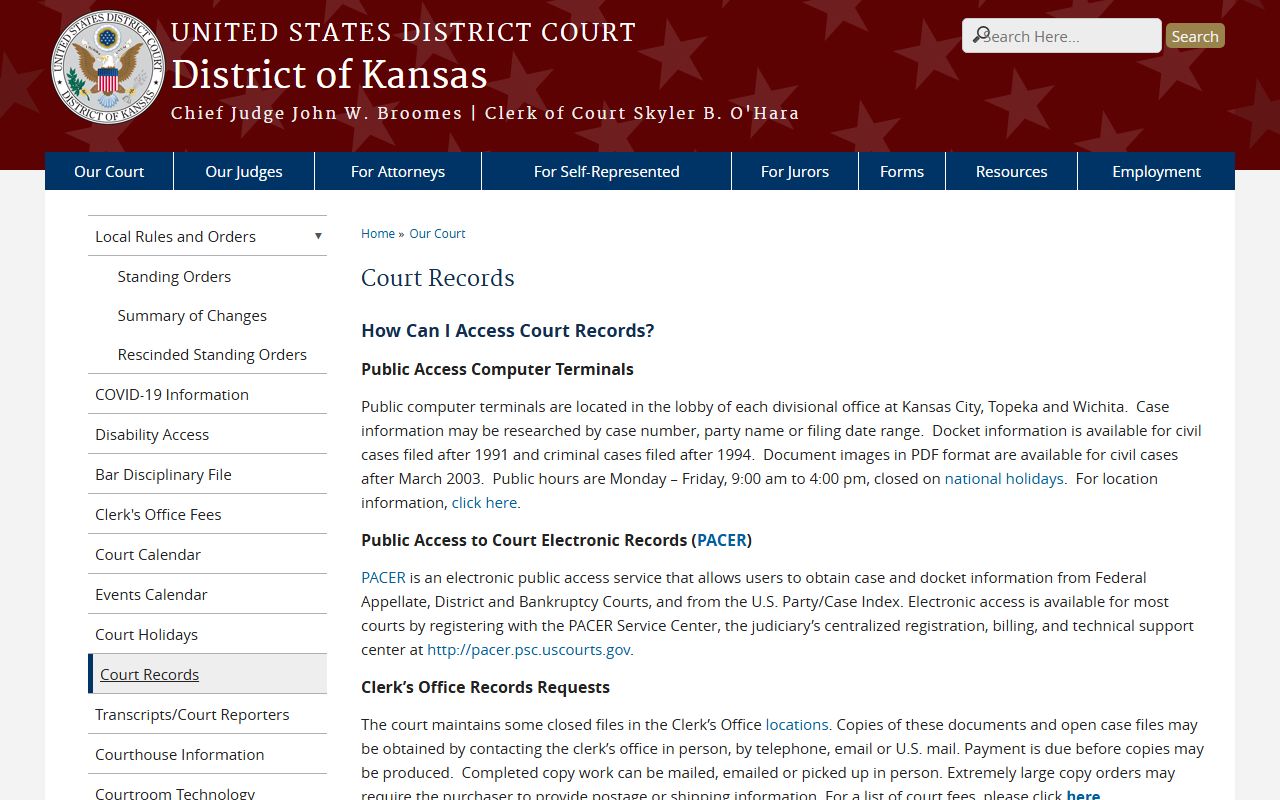
Use that federal channel for federal civil or criminal dockets, not for Osage County state District Court cases.
The District of Kansas CM/ECF login, U.S. Bankruptcy Court for the District of Kansas, and Kansas Bankruptcy PACER lookup are also federal or bankruptcy tools.
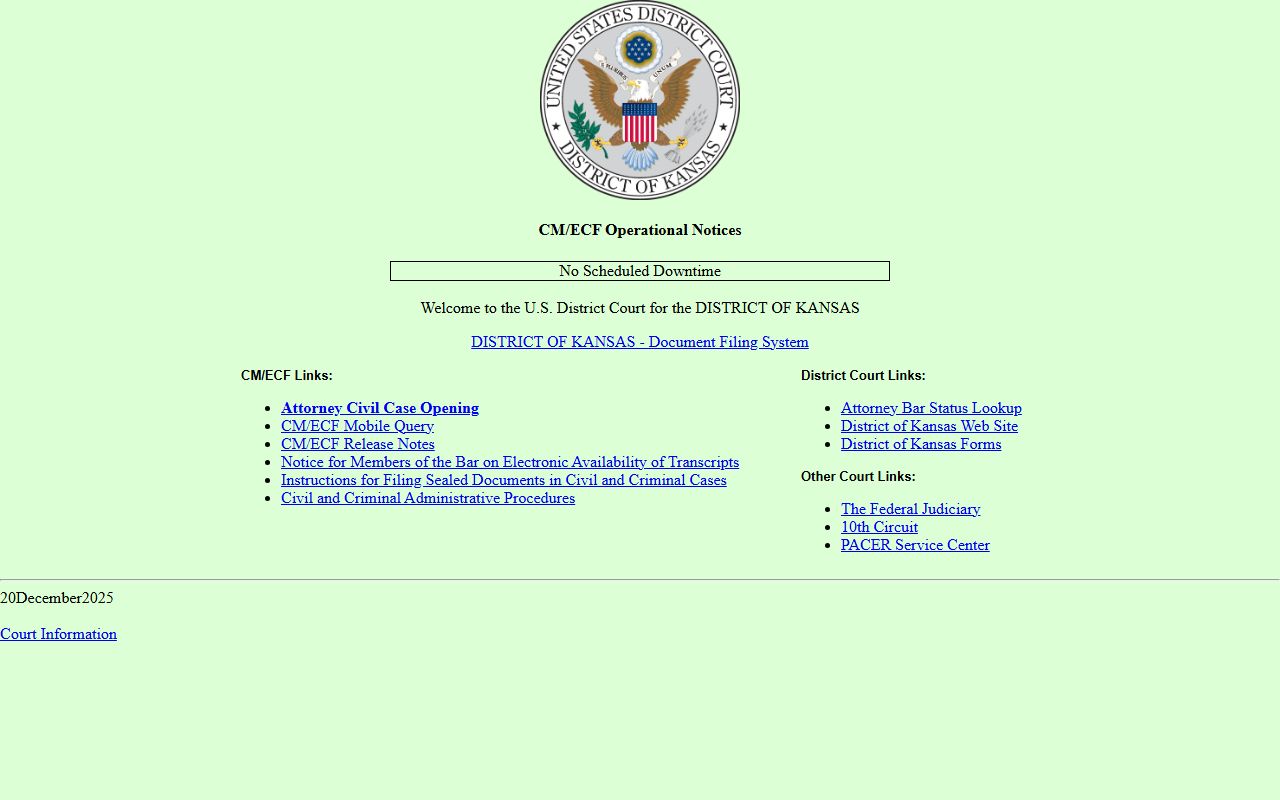
CM/ECF is for federal electronic filing and case access, not county-level Kansas District Court filings.
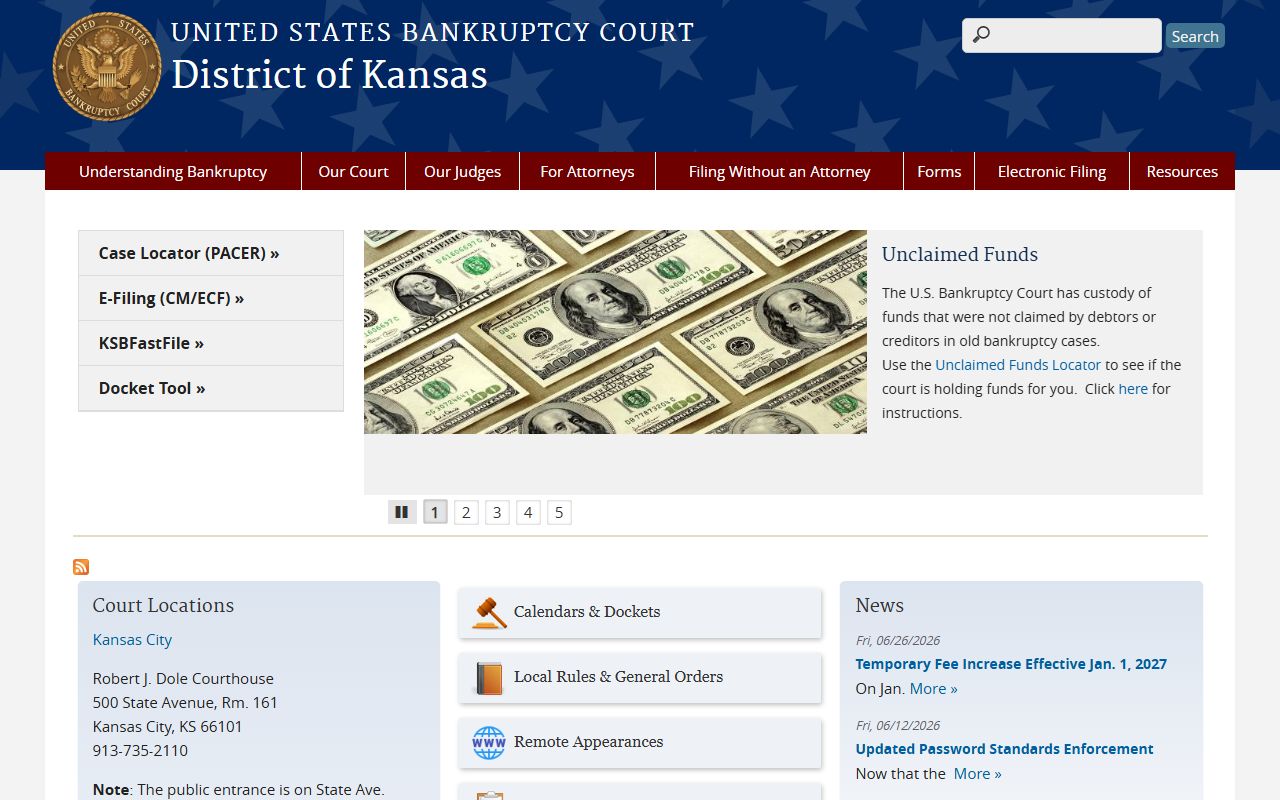
Bankruptcy records are federal records, even when the debtor lives in Osage County.
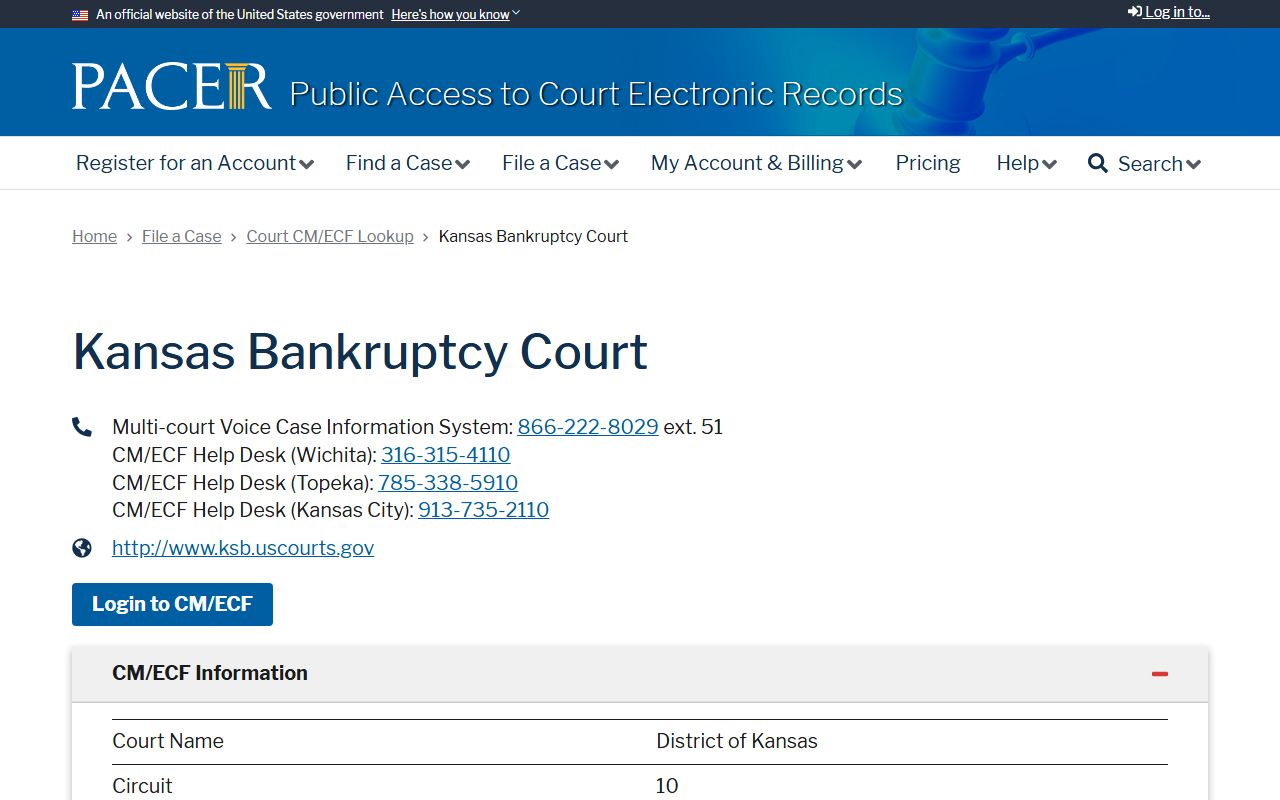
The PACER bankruptcy lookup shows the final boundary between Kansas state court records and federal bankruptcy case records.
Note: A Kansas District Court case and a federal District of Kansas case require different portals and clerks.