
Osage County Arrest Records and Charges
An Osage County arrest record is tied to the law-enforcement side of an event. It may involve booking, jail intake, a register of persons charged, an offense report page, or a record request to the Sheriff's Office. The Osage County Sheriff Records policy is specific: Kansas arrest reports are not public record, but the Register of Persons Charged or arrest sheet is public information, except juvenile records. That distinction matters for anyone seeking a public arrest record in Osage County.
Court charges after arrest are different. The charge record begins when the Osage County Attorney or another prosecutor files a complaint, information, citation-based charge, or other charging document with the court. The filed charge can later be amended, reduced, dismissed, diverted, or carried through to a conviction. Booking status belongs with jail and sheriff channels, while charge status belongs in the court case. Custody and booking details are handled through the Osage County inmate lookup and jail records paths, while the final case outcome is part of the criminal court records file.
The Osage County Sheriff Records page is the local source for KORA costs, accident report access, law-enforcement release limits, records clerk hours, and the difference between open and nonpublic law-enforcement records.
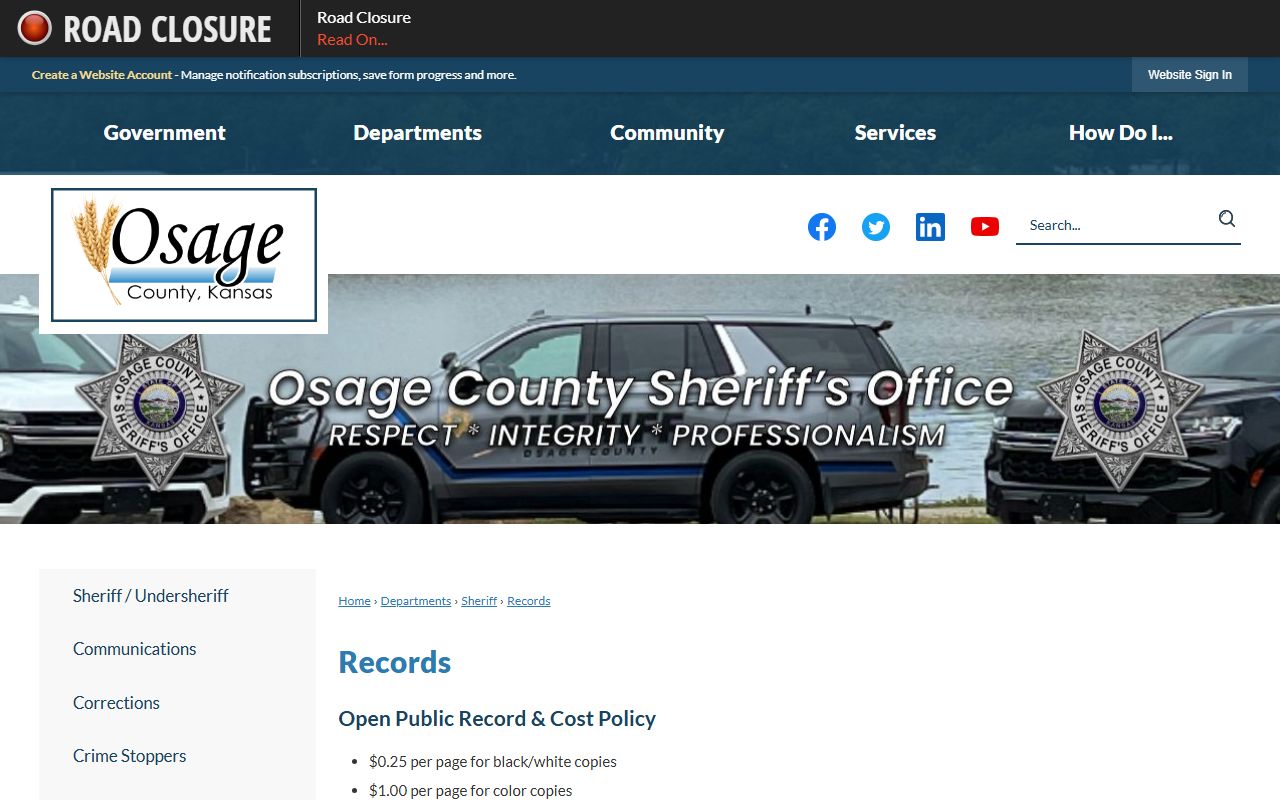
That page is the best local reminder that arrest information, booking records, offense reports, and filed court charges are not all released the same way.
Find Osage County Arrest Records
No official county mugshot database or single public booking search was identified in the local sources. The practical search uses several channels. For current custody, call the Osage County Jail or use Kansas VINE. For public law-enforcement records, use the Sheriff Records request process. For formal charges after arrest, use Kansas Case Search or the Clerk of the District Court. For statewide criminal history, use the KBI system when a fee-based background record is appropriate.
- Call the Osage County Jail at 785-828-4991 for current custody or booking-status questions.
- Use the Sheriff Records request route for public law-enforcement records that are legally releasable.
- Search Kansas Case Search by defendant name or case number for filed District Court charges.
- Read each charge line with its status, count, event history, and disposition instead of assuming the first charge is the final result.
- Contact the Clerk of the District Court when the public case exists but the needed document is not online.
The Osage County Sheriff Records page publishes costs for records requests: black and white copies are $0.25 per page, color copies are $1 per page, photo CDs are $5 with up to five days allowed, DVDs are $15 with up to five days allowed, and pictures are $1 per page. Older offense or accident reports over three years old may take up to five days to locate and copy. Official law-enforcement or government requests should be faxed on agency letterhead.
Osage County Charges After Arrest
After an arrest or citation, the charge record starts with a formal filing. In Osage County, the County Attorney prosecutes criminal, traffic, juvenile, CINC, involuntary commitment, and county code matters. The filing may be a complaint, an information, or another charging document allowed by procedure. The document names the defendant, sets out the alleged offense, and connects the charge to the District Court case number or municipal court file.
| Document | Filed By | Common Use | What to Check |
|---|---|---|---|
| Complaint | Prosecutor or authorized charging authority | Often starts a criminal case or count after investigation, arrest, or citation. | Offense title, statute, date, defendant, and probable-cause support. |
| Information | Prosecutor | Formal criminal charge used by the State of Kansas in filed court cases. | Count numbers, severity level, amended charges, and prosecutor signature. |
| Indictment | Grand jury | Less common in routine county cases but still a formal charging method. | Whether charges came from grand jury action rather than a standard prosecutor filing. |
The court charge record can change after filing. A defendant may have several counts from one arrest, and each count may have its own plea, dismissal, diversion, amendment, or conviction result. Municipal court charges for city ordinance matters can also be separate from District Court filings, so Osage City, Carbondale, and Lyndon municipal courts may need separate checks for city traffic or ordinance charges.
Osage County Charge Status
Charge status is the short label that tells where a filed allegation stands. A status is not always final. Pending charges can later be amended. Dismissed charges may still appear in docket history. Diversion can pause the ordinary path if terms are met, but revocation can send the case back toward conviction or sentencing. Osage County criminal and traffic docket examples include diversion status, diversion revocation, review hearing, preliminary hearing, and appear-order events.
| Status | Meaning in a Charge Record |
|---|---|
| Pending | The charge has been filed and no final disposition appears for that count yet. |
| Amended or reduced | The prosecutor changed the original charge, severity, count, or wording by later filing or court order. |
| Dismissed | The charge ended without conviction on that count, though other counts in the case may remain. |
| Diversion | The case is handled through an agreement that can avoid conviction if conditions are met. |
| Revoked | A diversion, probation, bond, or other court status has been challenged or ended because of alleged noncompliance. |
| Convicted | The charge ended in a guilty plea, verdict, or other conviction result. |
Note: A charge record should be read count by count because one Osage County case can contain several separate charge outcomes.
Osage County Charges vs Convictions
An arrest or filed charge does not prove guilt. It shows that a person was taken into custody, cited, or accused in court. A conviction is a later court result. This distinction is critical when reading Osage County arrest records and charges because sheriff register information, Kansas Case Search entries, and KBI criminal history records can each have different scope and timing.
| Point | Charge | Conviction |
|---|---|---|
| What it is | An allegation filed by the prosecutor or city. | A guilt result by plea, verdict, or accepted finding. |
| When it appears | After arrest, citation, or filing. | After final court action on the count. |
| Can it change? | Yes. It may be amended, reduced, dismissed, or diverted. | Later relief may be possible only through appeal, post-judgment order, or expungement if eligible. |
| Where to verify | Charging document and docket. | Disposition, journal entry, sentence, and criminal history when applicable. |
Osage County Arrest Record Limits
Kansas access rules support public records, but law-enforcement records have important limits. The Kansas Open Records Act chapter supplies the state framework. Osage County Sheriff Records says Page One of a Kansas Offense Report is open public record, but no juvenile records are released. Social Security numbers and driver license numbers are removed. DUI results and autopsy reports are not released by that agency. Accident reports have their own Crashdocs access path and are usually available after completion.
The K.S.A. 45-216 public policy statute states Kansas policy favoring open public records.
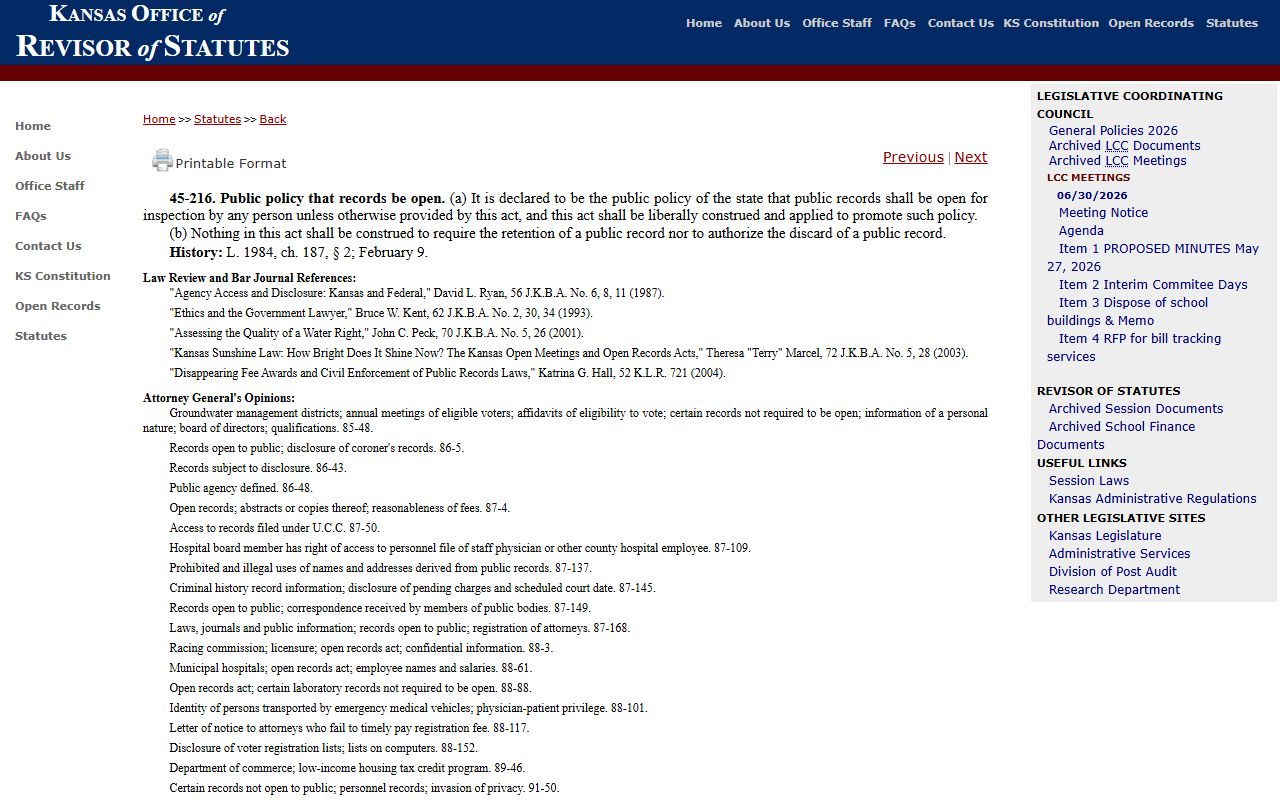
Open-record policy does not override every court rule, juvenile statute, privacy limit, or investigative exemption.
The K.S.A. 45-221 exemptions statute lists records public agencies are not required to disclose and supports separating open information from closed information where possible.
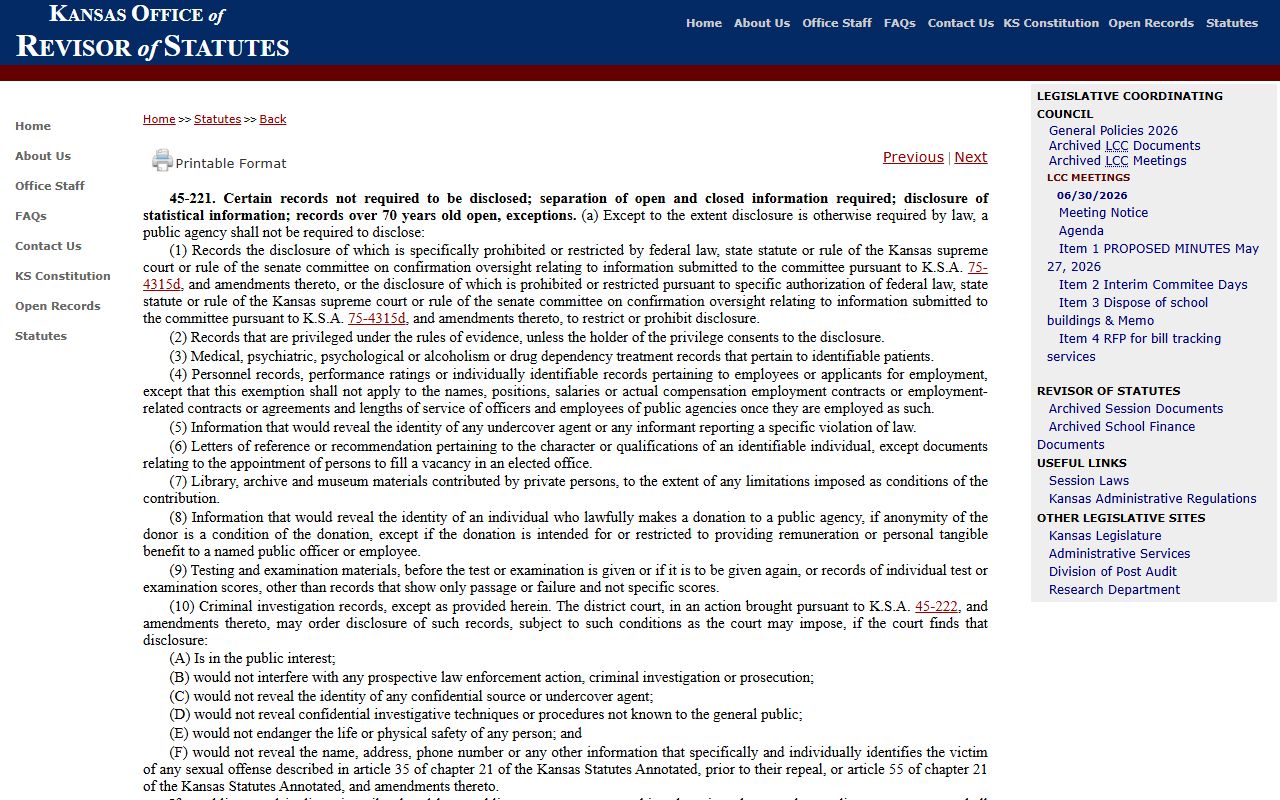
For Osage County arrest records, that means a public register entry may exist while an investigative report, juvenile record, or protected identifier remains closed.
Statewide Osage Charge Lookups
Statewide systems answer different questions from a county charge lookup. The KBI criminal history search is a fee-based name search for criminal history records. The KBI registered offender search is a public registry for sex, violent, and drug offender registration information. Kansas VINE is for custody status and notifications. KASPER is for Kansas Department of Corrections residents and supervision status, not a county jail booking blotter.
The KBI registered offender search disclaimer explains public access to sex, violent, and drug offender registration information.
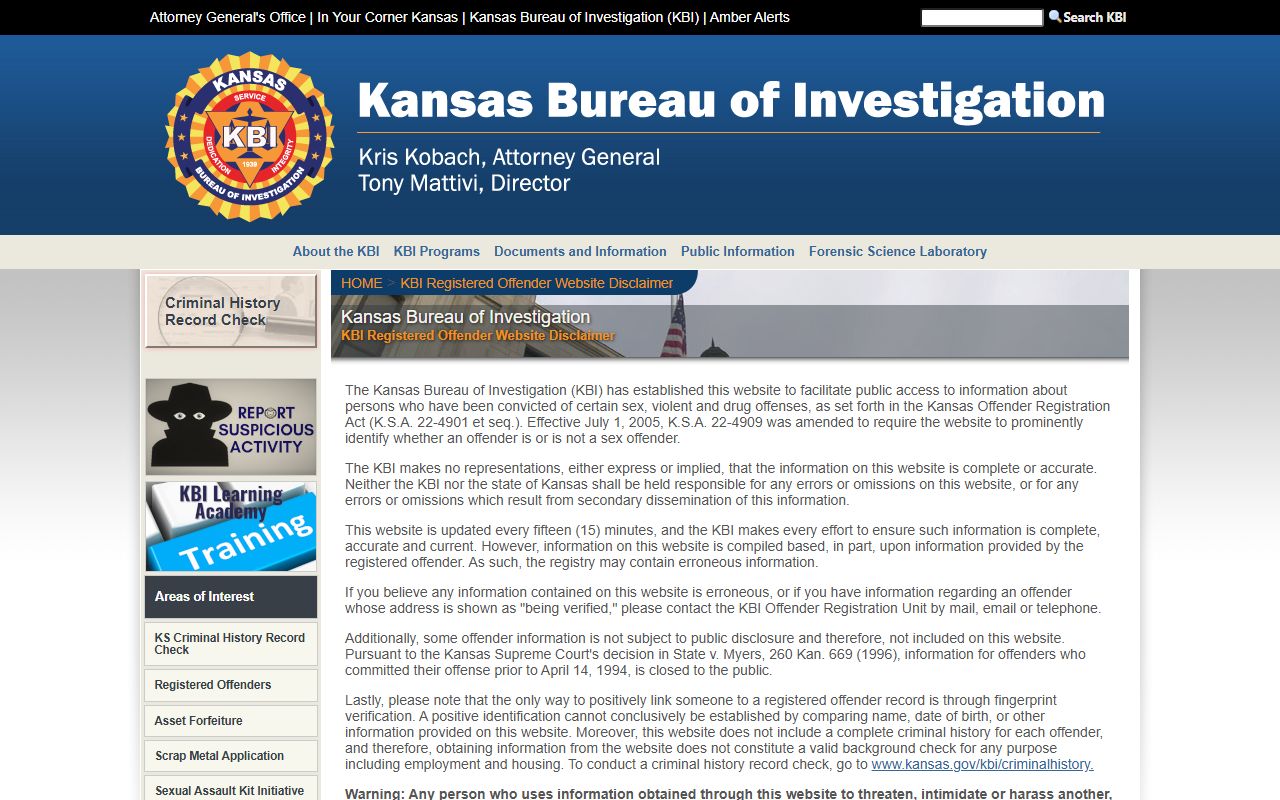
Registry status is not the same as a pending charge or a full criminal case file, so the record type must match the question being asked.
Restricted Osage Charge Records
Restricted charge records include juvenile offender matters, sealed cases, expunged records, active investigative material, victim-sensitive information, and personal identifiers. Sheriff Records states no juvenile records will be released. Kansas court access rules can also restrict electronic access to documents even when the docket is public. The result is common: a person may find a case number or event but need a clerk request or court order for more detail.
The K.S.A. 38-2309 juvenile offender records statute governs disclosure and preservation of juvenile offender court records.
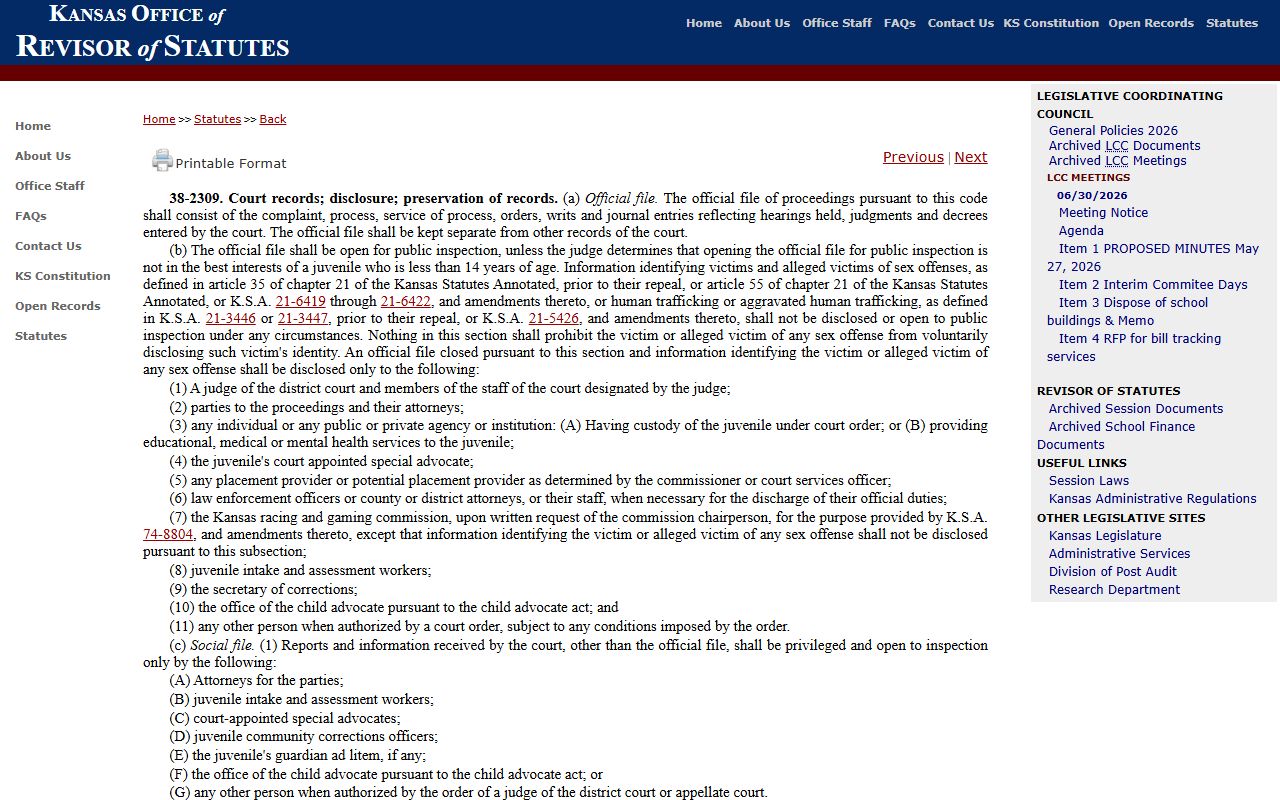
Adult and juvenile charge records should not be treated the same because juvenile files have distinct statutory access limits.
Important: Public arrest and charge lookups are not consumer reports for employment, tenant, credit, insurance, or other FCRA-regulated decisions.
Osage Expunged Charge Records
A sealed record is withheld from ordinary public view by law, court rule, or order. An expunged record is restricted after a court process. Kansas expungement law can apply to certain convictions, arrest records, and diversions, but eligibility depends on the offense, waiting period, sentence completion, prosecutor notice, and judge review. A dismissal or diversion does not automatically mean every trace of the arrest or charge has disappeared from all systems.
| Point | Sealed | Expunged |
|---|---|---|
| Public portal | Usually hidden from ordinary public access. | Not treated as ordinary public material after order. |
| How it happens | Rule, statute, privacy protection, or judicial order. | Petition and order under Kansas eligibility law. |
| Still accessible? | May be available to courts or authorized users. | May remain available for specific statutory purposes. |
| Osage County step | Check the issuing court or clerk if a public case suddenly disappears. | File in the court tied to the conviction, arrest, or diversion if eligible. |
The K.S.A. 45-218 inspection and request statute governs public-record inspection requests, agency response, refusal, and fees.
When a record is closed or redacted, the response should identify the lawful basis for withholding it where Kansas procedure requires that response.